Title I funds are part of the Elementary and Secondary Education Act (ESEA) authorization enacted in 1965. Funding provides extensive supplemental services to high poverty schools which support programs that improve and meet high performance and content standards. This policy is committed to closing the achievement gap between low-income students and other students. The program is based on a family-centered approach, involving family engagement and education activities as vital components.
Title I
Title I Authorization
When a school is designated to receive Title I support, federal funds will be allocated to supplement district funding. The federal funds are specifically intended to provide additional academic and family engagement activities.
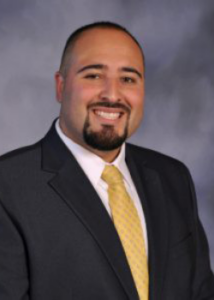
Parent Involvement is welcome and encouraged in Lincoln Public Schools and a required component of programming for Title I schools. The links below will provide you with information about the Lincoln Public Schools Parent Involvement Policy and a letter to parents from Dr. Marco Pedroza with specific parent notifications for parents with students attending a Title I school.
Parental Involvement Policy
Parent Notification on Teacher Qualifications
State of Nebraska Title I
Title I Funding
Email fpbudget@lps.org with any questions related to Federal Programs funding
Lincoln Public Schools - Schoolwide Title I Programs:
A schoolwide program is a comprehensive reform strategy designed to upgrade the entire educational program in a Title I school; its primary goal is to ensure that all students, particularly those who are low-achieving, demonstrate proficient and advanced levels of achievement on State academic achievement standards.
Parents of students attending any school in a district receiving Title I funds may request, and the district will provide to the parents in a timely manner, information regarding the professional qualifications of the of the student’s teacher(s) and paraprofessional(s).
| Lincoln Public Schools Title I Schoolwide Programs | ||||
|---|---|---|---|---|
| School # | School Name | Principal | School Phone | Address |
| 120 | Arnold Elementary | Jodi Frager | 402-436-1120 | 5300 W Knight Dr. (24) |
| 124 | Belmont Elementary | Kim Rosenthal | 402-436-1124 | 3425 N 14 St. (21) |
| 127 | Brownell Elementary | Nikosia Kruse | 402-436-1127 | 6000 Aylesworth Av. (05) |
| 129 | Campbell Elementary | Sean Bailey | 402-436-1129 | 2200 Dodge St. (21) |
| 132 | Clinton Elementary | Angela Luedtke | 402-436-1132 | 1520 N 29 St. (03) |
| 210 | Culler Middle | Michaela Hahn | 402-436-1210 | 5201 Vine St. (04) |
| 211 | Dawes Middle | Liz Miller | 402-436-1211 | 5130 Colfax (04) |
| 136 | Elliott Elementary | Michelle Kulas | 402-436-1136 | 225 S 25 St. (10) |
| 159 | Everett Elementary | Michael Long | 402-436-1159 | 1123 C St. (02) |
| 213 | Goodrich Middle | Kelly Apel | 402-436-1213 | 4600 Lewis Ave. (21) |
| 139 | Hartley Elementary | Rob Rickert | 402-436-1139 | 730 N 33 St. (03) |
| 144 | Huntington Elementary | Kristi Schirmer | 402-436-1144 | 2900 N 46 St. (04) |
| 149 | Lakeview Elementary | Susan Hershberger | 402-436-1149 | 300 Capitol Beach Blvd. (28) |
| 215 | Lefler Middle | Allison Meister | 402-136-1215 | 1100 S 48th St. (10) |
| 150 | McPhee Elementary | Chris Boden | 402-436-1150 | 820 Goodhue Blvd. (08) |
| 155 | Norwood Park Elementary | Pam Hale | 402-436-1155 | 4710 N 72 St. (07) |
| 212 | Park Middle | Charlotte Everts | 402-436-1212 | 855 S 8th St. (08) |
| 160 | Pershing Elementary | Annette Bushaw | 402-436-1160 | 6402 Judson St. (07) |
| 161 | Prescott Elementary | J.J. Wilkins | 402-436-1161 | 1930 S 20 St. (02) |
| 163 | Randolph Elementary | Ryan Erickson | 402-436-1163 | 1024 S 37th St. (10) |
| 164 | Riley Elementary | Jeff Bjorkman | 402-436-1164 | 5021 Orchard St. (04) |
| 166 | Saratoga Elementary | Marci Imel | 402-436-1166 | 2215 S 13 St. (02) |
| 168 | West Lincoln Elementary | Scott Schwartz | 402-436-1168 | 630 W Dawes Ave. (21) |